Data and AI literacy
Your teams learn data and AI by playing.
Ready-to-use data and AI literacy games of 5 to 10 minutes that you adapt to your company. Your teams play, you measure the skills they gain.
- Data hosted in the EU
- SSO, MFA and audit log
- SCORM 1.2, 2004 and xAPI
- Designed for ISO 27001 and SOC 2
Catalogue
Short games, graded like a quiz
5 to 10 minute games, ready to fork. Behind the storyline, every game asks real questions: the grade measures what players know, skill by skill, and lands in your reports.
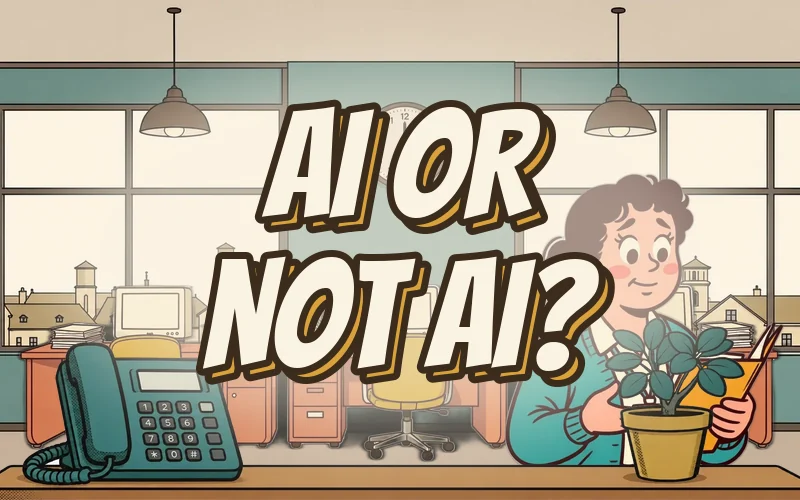
AI or Not AI?
Colleagues line up at your desk to put AI on their problem. Stamp AI or NOT AI before the clock runs out: personal data, binding decisions, unreviewed publishing and mechanical work call for a human or a script.
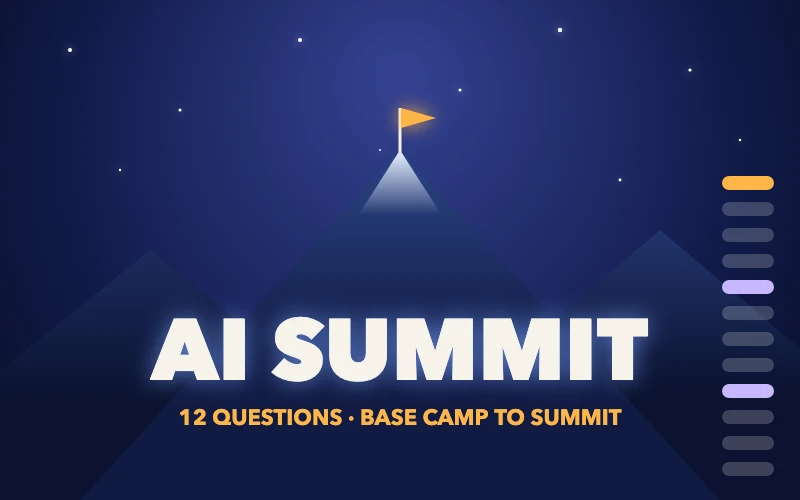
AI Summit
Climb from base camp to the summit by using AI wisely at work: hallucinations, verification, bias, personal data, human review, the right tool for the job and who is accountable, in twelve questions.
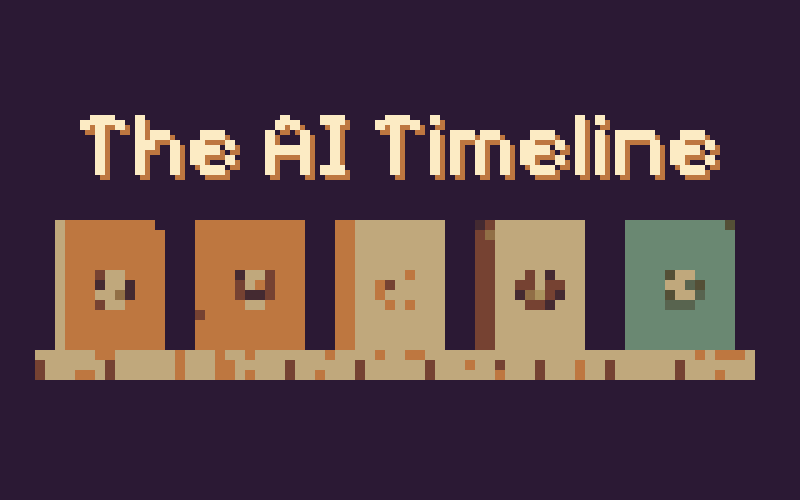
The AI Timeline
Put the milestones of artificial intelligence back in order, from the Turing test to the AI Act. Each answer reveals the dates and the story behind them: booms, winters, breakthroughs and rules.

Custom-made A game built around your teams
Your real cases, your tools, your brand: we design with you the game this catalogue is missing.
Delivered in 3 weeks · From €5,000 excl. VAT Let's talk about your project
LMS integration
Inside your LMS, down to every question
The game opens in your learning platform and sends back a grade checked by our server, with the detail of every question and every skill. Your learners never leave the LMS.
Included in the Pro and Enterprise plans, for private games played by signed-in members.
SCORM 1.2 and 2004
One package per game and language, imported like any SCORM activity. With 2004, completion and success are reported separately, and the score is also given on a 0 to 1 scale.
Shown inside the LMS page
The game appears inside the activity page, and only on the LMS addresses you declare: a test launch picks them up for you. Opening in a separate window remains available as a fallback.
Two-click SSO sign-in
On the first launch, a learner already signed in to your identity provider clicks the sign-in button named after your organisation, then confirms. After that, no more sign-ins while the session lasts. That session can only be used to play.
Every question, every skill
One interaction per question (learner response, correct answer, result, weight, response time) and one objective per skill, written from the answers our server has graded.
xAPI to your LRS
Completed, passed or failed, quit before the end and, optionally, every answer with the full description of the question. Pseudonymised by default.
A training record you can trust
The grade counts first attempts only and is recalculated on the server; speed, streaks and lives earn game points, kept apart. The attempt is marked incomplete as soon as it opens.
How it works
Your game, in your context, within an hour
No development. You start from a proven game and adapt it to your context.
Fork a game from the catalogue
You get your own fork, pinned to a frozen version of the game. Updates to the original game stay under your control.
Adapt content and rules
No code, for games marked Editable: the questions (importable as CSV), the look (images, texts) and the rules (timer, number of questions, pass mark). The other games are shared as they are, and our team adapts them on request.
Deploy to your address
Publish a release at your organisation's address, open to the whole organisation or to specific groups.
Measure skills
Dashboards, CSV and PDF exports, and the success rate of every question: follow your teams' progress, skill by skill.
Built for learning, data and security teams
Reports a steering committee can read
Completion rate, progress per skill, success question by question, comparison per group. Pseudonymised by default, named only if you turn it on.
Security that passes the audit
- Enterprise SSO (OIDC, SAML) and two-step verification, both enforceable for your members
- Immutable audit log
- Catalogue games isolated from the site: a game cannot reach the session or account data
- Self-service GDPR export and erasure
- Data hosted in the EU, designed for ISO 27001 and SOC 2
Fine-grained access, no IT ticket
Five clear roles (Owner, Admin, Editor, Analyst, Member) and an access policy per game: public, the whole organisation, or a few groups.
AI Act
AI Act Article 4: build your teams' AI literacy
Since 2 February 2025, organisations that use AI systems must take measures to develop their staff's AI literacy. Short games, graded question by question and skill by skill, help you do it and keep a record of it.
Understand Article 4 of the AI ActStart for free
You only pay for the active members of your organisation. Prices exclude VAT.
Free
€0 forever
- 1 live private game
- Unlimited public games, 1,000 plays per month
- 3 members
- Online reports and CSV export
Plus
€6 per seat per month, excl. VATor €60 per seat per year, excl. VAT (2 months free)
- Everything in Free
- 3 live private games at a time
- Unlimited public games and plays
- Unlimited members
- PDF reports
Pro
Most popular €10 per seat per month, excl. VATor €100 per seat per year, excl. VAT (2 months free)
- Everything in Plus
- Unlimited private games
- SCORM 1.2 and 2004 packages
- xAPI statements to your LRS
- SSO (OIDC, SAML), can be enforced
- Public API
Enterprise
Custom tailored terms
- Everything in Pro
- Games custom-built by Maketools
- Your games customised by our team
Public games are free and unlimited on every plan: playable without an account, after a Maketools welcome screen.
Frequently asked questions
Your questions, answered
What learning, data and compliance teams ask most often before getting started.
How long does a game take?
4 to 10 minutes depending on the game, played solo on a laptop or a phone. In your fork, you set the number of questions, the timer and the pass mark.
Browse the catalogueDo players need an account?
Not for catalogue demos or public games: they are played without an account and without personal data, for example at an event. Your organisation's private games (Organisation or Restricted access) require a member account, so each person's results can be tracked.
Public games and eventsCan we plug the games into our LMS?
Yes, on the Pro and Enterprise plans. A SCORM 1.2 or 2004 package shows the game inside your LMS page (or in a separate window as a fallback) and sends back the grade, the status, one interaction per question and one objective per skill. With your organisation's SSO, a learner already signed in to your identity provider needs two clicks on the first launch, then no sign-in at all while their session lasts. An xAPI connector can also send results to your LRS. SCORM is for private games, played by signed-in members. Games with the "LMS compatible" badge are graded like a quiz and send this detail.
LMS integration guideWhat does a game's grade measure?
Knowledge. Every game is a questionnaire: the grade is the share of questions answered correctly at the first attempt, weighted if you wish, and recalculated by our server from the answers. An unanswered question counts as wrong. Speed, streaks or lives earn game points, shown separately and never in the grade. That grade is what goes into your reports, against your pass mark and into your LMS.
Keeping a record of trainingDo the games help with Article 4 of the AI Act?
Article 4 asks organisations that use AI to take measures to develop their staff's AI literacy. Maketools games are one such measure: they train named skills and keep a record of them in your reports. On their own, they are not a compliance programme.
Article 4 of the AI Act explainedWhat happens to players' data (GDPR)?
It is hosted in the European Union. Reports are pseudonymised by default, a group of fewer than 5 players is never broken down, and play-level detail is deleted after 13 months. A player without an account provides no personal data.
Trust centerWhat does our IT team need to allow?
Two HTTPS addresses: maketools.ai, the site, and play.maketools.ai, which serves the game code inside an isolated frame (or simply *.maketools.ai). For a game shown inside an LMS, also declare your LMS address in Maketools and allow the sign-in window.
Network access and firewallsWhich languages are available?
The site is in English and French, and each catalogue game lists its languages. A fork is written in one source language; you add other languages with a translation file that you have translated and then import.
Translate a forkCan we adapt a game to our brand and our cases?
Yes, without code, for games with the "Editable" badge: fork one, rewrite its questions (or import them from a spreadsheet as CSV), change its images and texts, and set its rules. Every fork also has a Brand space (colours, font, logo, contrast checked); it applies live inside the games that declare it, such as AI Summit, AI or Not AI? and The AI Timeline, and around every catalogue game, which runs in an isolated frame. A game without the "Editable" badge keeps its content: our team adapts it on request, or builds a bespoke game.
Edit a game's questionsHow much does it cost?
The Free plan is free for a small team. Plus and Pro are billed per active member, Enterprise on quote. Public games are free on every plan.
See pricingSee for yourself in five minutes
Public games are played without an account: start a session and picture it in your colours.
Try a game, no account needed